
God Helps Those Who Grid Their Plans.
- Arq. Gerardo Flores Rojas

- 6 may
- 4 Min. de lectura
Thinking of that old saying—surely known to all of you (“The early bird…”), this time we’ve decided to give it a twist and connect it to our craft.
Let me tell you right away: this is no joke. I’m going to explain exactly how it applies to architectural design—and why you should start using it in your own projects.
Let’s start by understanding that in architecture, a module is a unit of measurement used to determine proportions between different parts of a composition—repeated systematically throughout a space.
Historically, many well-known architects, creators, and designers have used their own measurement systems to shape their work.
In 1948, Le Corbusier developed Le Modulor, a system based on the average height of an adult human. It combined mathematics, nature, and geometry to guide proportion and spatial order.

During the Renaissance, Leonardo da Vinci illustrated what he believed to be the ideal human proportions in his famous Vitruvian Man, using detailed drawing and annotations on human anatomy.
If we go even further back, in the 1st century BC, Marcus Vitruvius Pollio, a Roman architect, established the foundational connection between architecture and the human body in his treatise De Architectura—known today as the first book ever written on architecture to have endured through time.
It’s worth noting that in the sequence I present here, all three figures—Vitruvius, Da Vinci, and Le Corbusier—were influenced by the findings of their predecessor, and each applied those ideas through the lens of their own personal vision.

Thus, in our time, the works that stand the test of time are those with carefully considered proportions and, above all, a sense of unity among all their elements.
When we observe a building and find it beautiful—regardless of its style or materials—it is because it was created based on measurement and proportion, beyond its physical substance.
So, if we design based on order, scale, and the relationship between each part—drawing on existing knowledge of human proportions, the application of measurement systems in materials and construction techniques, and a deep understanding of the activities that take place within a space—we will achieve far better results in the creation of any architectural project.
For these very reasons, I’d like to share 7 practical tips on how to use modularity in architectural design:
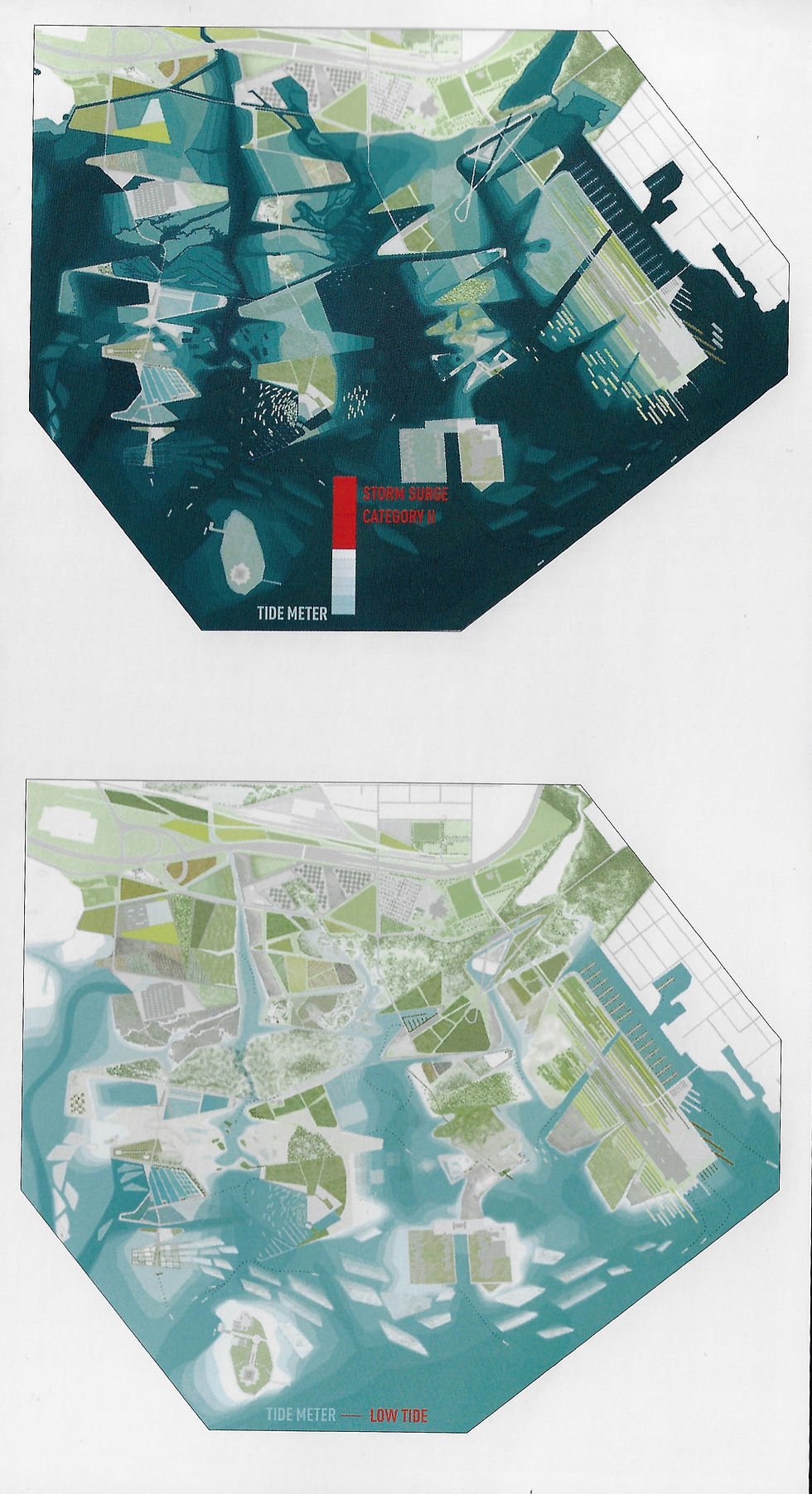
1. BREAK DOWN YOUR SITE. Analyze the plot where your project will be located—identify its dimensions, proportions, and the geometric shapes that define it.This will help you break it down into individual, yet interconnected elements. It’s especially useful for irregular-shaped lots or those with steep topography.
2. EVERY SITE HAS RESTRICTIONS. Some are imposed, others are simply inherent—but either way, you must modularize the spaces in advance to accommodate pedestrian and vehicular access, public circulation (depending on the programmatic needs of your building), and define key areas such as the front, rear, and especially the orientation of the structure in relation to its surroundings. Each façade must be considered in how it relates to the exterior.
3. LOOK FOR REFERENCES IN THE CONTEXT. Surrounding buildings offer valuable insight into urban-scale proportion.Remember that a city’s layout often responds to both artificial and natural context (at least geologically).Don’t focus solely on the forms, styles, or materials of neighboring structures.Instead, pay attention to the logic of their architectural solutions as a response to context.
4. ESTABLISH A REPLICABLE UNIT OF MEASUREMENT. Now that you’ve analyzed the urban scale, define a measurement system that will serve as the basis for your spatial design.You can be as strict as you’d like in ensuring everything fits precisely.Some designers use commercial product sizes—like tiles, bricks, or blocks—to determine the exact number of pieces that will define heights, widths of hallways, or entire spaces.Personally, I recommend starting with anthropometry and ergonomics, and from there complement your system with spatial perception and the standardized dimensions of materials you plan to use.

5. ORDER IN COMPOSITION. Everything should follow a sequence and be logically connected. The best way to achieve this is by starting with a preliminary architectural plan or layout, and then conducting a synthesis exercise: eliminate architectural elements that don’t contribute to the overall design, and introduce others that create a sense of unity.
For example, consider how a wall or roof can appear to flow continuously between interior and exterior spaces, rather than being perceived as isolated or disconnected elements.

6. THE GUIDING AXES OF THE PROJECT. What we call axes are the guiding lines that organize the spatial layout on a plan.
Make sure your composition includes related axes—avoid unnecessary misalignments, minimize their number, and maximize the relationship between them.
Try to keep the spacing between axes as proportional divisions of your chosen unit of measurement: whole units, halves, thirds, or quarters. Establishing this proportion brings harmony to the design.
Even the builder reading your plans will appreciate this clarity. And as for the result: believe me, humans instinctively perceive whether a space feels harmonious and well-proportioned. This is known as sensory memory, and yes—we’re born with it.
7. FAÇADES. Applying the module to the façade becomes almost automatic if it was already present in the interior design.After all, a façade is a formal composition that reflects what happens within the interior space.When designing façades, avoid adding decorative elements that don’t align with the spatial rhythm.Instead, allow wall thicknesses, slabs, beams, and door/window lintels to replicate and echo each other’s dimensions.Create alignments. Let volumes emerge—but don’t emphasize where they end.If your building has symbolic value or is purely functionalist, let the façade express that.Too often, architects obsess over façade materials to give their project “character and distinction,” neglecting the experiential quality of the space and its relationship between inside and outside.Stay away from that.

TO CONCLUDEIt’s common for architects who have spent much of their time designing compact spaces to struggle when faced with large-scale projects—or vice versa: they find it challenging to fit all of a client's requirements into a small plot.The idea that we’re either “good at small houses” or “specialists in large residences” is a limitation that no longer fits our time.
Today’s architectural needs demand that we adapt, recycle, and design both compact and large-scale buildings with a focus on resource efficiency and flexibility—transforming or reimagining existing spaces for new uses.
If you know how to apply modularity, proportion, and the relationships between each architectural element, you’ll have no problem scaling your designs—from micro to macro.


Comentarios